Mermaid Vector Clipart – 57 Graphics & Illustrations
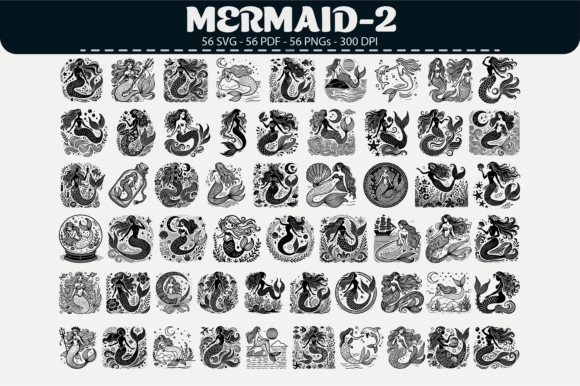
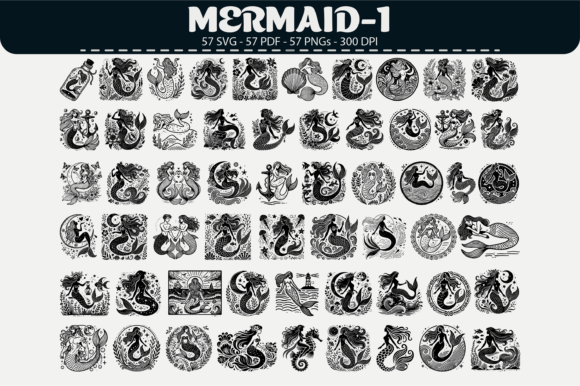
When I unzipped the folder for the Mermaid Vector Clipart – 57 Designs bundle, the first thing that hit me was the quiet confidence of black-and-white linework. There is no forced whimsy here, no overworked color gradients fighting for attention. Instead, the 57 mermaid illustrations feel like they were pulled from a vintage storybook or a boutique label concept — the kind of assets that whisper rather than shout. As a brand designer, I immediately recognized that restrained mood. For content marketers and product creators, this means you’re not buying decorative noise; you’re getting a cohesive graphic design asset that can anchor a campaign without overpowering your message.
The emotional tone is delicate, slightly nostalgic, and surprisingly versatile. Some mermaids hold seashells, others float with flowing hair, and a few are stylized almost like ornamental flourishes. Because the set is entirely black and white, it invites you to project your own brand palette onto the figures. This is a smart design decision: it prevents the illustration from hijacking your visual hierarchy. Whether you’re building a skincare line, a children’s book, a coastal cafe menu, or a seasonal Pinterest campaign, the Mermaid Vector Clipart – 57 Designs bundle gives you a foundation that feels intentional rather than clip-art cliché.
From First Glance to Brand Perception: What This Graphic Asset Communicates
In my work, I test every creative design asset against a simple question: “What does this say about the business before the audience reads a single word?” With these mermaid illustrations, the message lands somewhere between artisanal care and fluid storytelling. The hand-drawn quality suggests a brand that values craft, not mass production. That makes it a strong fit for handmade product labels, packaging inserts, and lifestyle blogs that rely on emotional connection over hard-sell tactics.
For a small business launching a new product — say, a sea salt scrub or a linen clothing line — the Mermaid Vector Clipart – 57 Designs could instantly unify the packaging design, Instagram story highlights, and thank-you cards. The consistency of the line weight across all 57 designs means you can mix and match without worrying about mismatched styles. That’s a huge relief when you’re building a brand identity on a tight timeline and every visual touchpoint needs to feel like it belongs to the same family.
How the 57 Mermaid Designs Fit into a Real Marketing Workflow
Let me walk you through a concrete scenario. I recently helped a client refresh her social media graphics for a summer pop-up market. She needed a series of Pinterest pins, Instagram posts, and a printable coupon flyer — all within a week. The campaign’s theme was “ocean calm,” and we used the mermaid vector clipart as the hero element for the pin graphics and as subtle corner accents on the coupon. The SVG design files allowed me to resize without losing crispness, while the PNG design format gave me quick drag-and-drop flexibility inside Canva templates for the client’s own later edits.
What impressed me most was how the illustrations supported a clear visual hierarchy. In the pins, the mermaid figure became the focal point, with the headline layered over her tail in a soft serif font. The black-and-white nature kept the graphic from competing with the product photo, which was a pastel jar of body butter. The contrast actually made the product pop more. This is exactly the kind of synergy you want from a design bundle — it should elevate your marketing visuals, not battle them.
Where This Digital Product Shines Brightest in Content Marketing
After testing the asset across multiple formats, I can confidently say the Mermaid Vector Clipart – 57 Designs performs best in contexts where storytelling and atmosphere matter. Here are some of the strongest use cases I’ve mapped:
- Hero graphics for blog posts — especially on topics like sustainability, slow living, or creative parenting.
- Pinterest pins — the intricate linework stands out against light backgrounds and invites clicks without feeling clickbaity.
- Packaging accents — think belly bands, hang tags, or tissue paper patterns for boutique brands.
- Editorial design — drop caps, chapter dividers, and margin illustrations for digital magazines or lead magnets.
- Branded content bundles — media kits, ebook covers, or printable checklists gain a polished, artisan feel instantly.
- Social media covers — Facebook group headers, YouTube channel art, or LinkedIn banners where you want a soft, approachable visual.
- Email banners — the mermaids can frame a seasonal sale announcement or a product launch teaser without overwhelming the CTA.
- Sticker and merchandise design — the clean lines translate beautifully to die-cut stickers, tote bags, or apparel mockups.
In every case, the asset helped me achieve a stronger first impression and a more memorable campaign visual. The consistency of the collection means that when you use one mermaid on a product label, another on a social graphic, and a third on a thank-you insert, the audience experiences a subtle but unmistakable brand recognition. That repetition builds audience trust and a professional appearance that many small businesses struggle to maintain.
When to Use Caution: Limits of the Mermaid Theme
No design asset is universal, and this one is no exception. Through my brand designer lens, I’d be cautious about using the Mermaid Vector Clipart – 57 Designs in formal corporate branding, dense information layouts, or low-contrast backgrounds. The detailed linework can become illegible at very small sizes — think of a tiny mobile ad or a cramped footer icon. If your brand is extremely minimal, with a lot of white space and sans-serif typography, a few of the more ornate illustrations might feel slightly out of place. In those cases, I’d pick the simplest designs from the set and use them sparingly as decorative brand elements rather than primary visuals.
Also, while the black-and-white format is a strength, it does require deliberate pairing. If you drop these illustrations onto a dark or busy background, the fine lines can disappear. Always test readability on mobile screens before finalizing a campaign. I always preview the SVG design versions inside a real campaign mockup, scaling them down to see how they hold up. The good news is that the majority of the 57 designs retain their charm even at reduced sizes, especially the ones with bolder outlines.
Practical Brand Designer Notes for Seamless Integration
Before you commit to a full campaign rollout, I recommend a few checks that I run for every client project. These steps help you avoid the awkward “this doesn’t belong” feeling that can ruin an otherwise solid marketing piece.
- Test with your brand color palette. Because these are black and white, you can easily recolor them in Illustrator or Canva. Try overlaying your primary brand color on a mermaid silhouette and see if it still feels like “you.”
- Check black-and-white usage. Not every piece needs color. In fact, leaving the mermaids in their original black-and-white can create a beautiful, timeless effect on light cream or kraft paper — perfect for packaging labels.
- Place inside real campaign mockups. Don’t just look at the vectors in isolation. Drop them into your Instagram grid preview, a Pinterest pin template, and a product tag mockup. The context will reveal any scaling or spacing issues.
- Preview on mobile screens. A 1-inch-wide mermaid on a phone screen is very different from a 5-inch-wide version on a desktop. Make sure the details don’t turn into visual noise.
- Compare against competitor visuals. If three other businesses in your niche are using similar ocean-themed graphics, you might need to use these in an unexpected way — like a partial outline or a custom pattern — to maintain differentiation.
- Check font pairing. I’ve tested these illustrations with serif fonts (elegant, editorial), sans serif (clean, modern), script fonts (romantic, flowing), handwritten fonts (playful, personal), and display fonts (bold, thematic). The mermaids work best with serif, script, and handwritten styles, but they can also contrast nicely with a sharp sans serif when you want to balance softness with structure.
- Review spacing and balance. Because some illustrations are more detailed than others, always give them breathing room. A crowded layout will make the mermaid look like clutter, not a deliberate design choice.
- Confirm commercial licensing. This is a digital download, and as with any graphic design asset, you must verify that the license allows commercial use, client work, and products for sale. The description emphasizes “no physical product will be shipped,” but the real question is about usage rights. Always double-check before using these in paid campaigns, business branding, or merchandise.
Why This Design Bundle Supports Marketing Goals Beyond Aesthetics
From a content marketer’s perspective, the Mermaid Vector Clipart – 57 Designs bundle does more than decorate. It actively reinforces brand identity by creating a consistent visual language. When a customer sees a mermaid detail on a packaging insert, then recognizes a similar motif in an email banner, they feel a familiarity that no amount of text can generate. This emotional connection is what turns a casual browser into a repeat buyer. In a digital product launch, that consistency directly improves product presentation and reduces the cognitive load on the audience — they don’t have to re-learn your brand every time they encounter a new touchpoint.
For social media managers, the asset also solves a common pain point: the need for fresh, on-brand visuals without constantly commissioning custom illustrations. The 57 designs offer enough variety to sustain a seasonal campaign, a product launch, or a content series without feeling repetitive. You can rotate them, crop them, and layer them with different textures to create the illusion of an ever-evolving visual library — all while maintaining a cohesive look.
One underrated benefit is how these illustrations can improve clearer visual hierarchy in crowded layouts. When you use a mermaid figure as a framing device around a headline, it naturally draws the eye inward. In a blog graphic, placing a subtle mermaid silhouette in the margin can guide the reader’s gaze toward the title without screaming for attention. That kind of thoughtful design is what separates professional branding from messy DIY graphics.
The Subtle Art of Using Illustrations Without Looking Like a Template
One fear I often hear from business owners is that clipart will make them look generic. But the Mermaid Vector Clipart – 57 Designs bundle sidesteps that trap because the illustrations aren’t the typical glossy, cartoonish vectors you see on free sites. The hand-drawn quality and the consistent line thickness give them a custom-illustrated feel. When I used them in a Canva template for a client’s editorial design, the result looked like a bespoke illustration commissioned for the piece. The key is to treat the mermaids as decorative brand elements rather than the entire message — let them accent, not dominate.
For creative entrepreneurs selling digital products, these mermaids can become part of a printable design bundle, a media kit, or a content marketing lead magnet. The SVG and PNG design formats make it easy to integrate into existing workflows, whether you’re designing in professional software or quick-edit platforms. The fact that the set includes 57 designs means you can even create a mini-branding system where certain mermaids correspond to specific content pillars — a thoughtful touch that shows strategic thinking.
In a recent campaign, I used one of the more detailed mermaid illustrations as a watermark-style hero on a product launch visual. The response was overwhelmingly positive: comments praised the “artistic vibe” and the “dreamy quality” of the graphics. That’s the power of a well-chosen digital product — it elevates the brand from a transactional seller to a memorable experience. And in a crowded creative marketplace, that emotional lift is often the difference between a scroll-past and a click-through.