Spooky Fence Clipart Set
First Impressions: Eerie, Clean, and Ready for Stitching
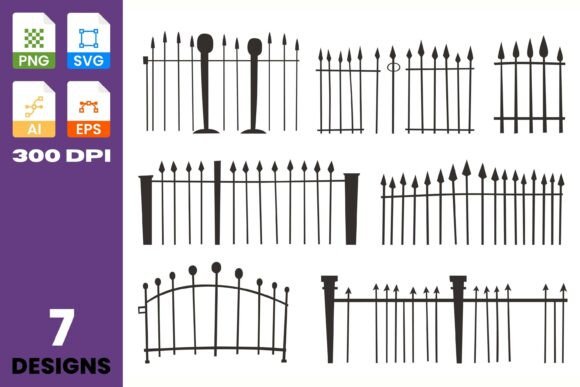
When I opened the Spooky Fence Clipart Set, what struck me immediately wasn’t just the Halloween vibe—it was the intentional restraint. These aren’t cartoonish or cluttered silhouettes. They’re seven gothic gate and fence outlines with sharp spear-tipped edges, balanced negative space, and consistent line weight. As an embroidery designer who’s stitched hundreds of themed assets, I appreciate that this set leans into mood over mayhem. It feels like something you’d confidently use on a boutique baby onesie—not because it’s “cute,” but because it’s curated: moody enough for adult decor, subtle enough for heirloom nursery pieces.
A Real Project Test: Embroidering a Haunted Tote for a Local Gift Shop
Last week, I prepped a custom embroidered tote bag for a small-town gift shop launching their October collection. Their ask? “Something spooky—but not scary. Think vintage apothecary, not slasher film.” The Spooky Fence Clipart Set landed perfectly in that sweet spot. I chose the narrow arched gate silhouette (the third in the set), resized it to 3.2” wide, and digitized it as a clean satin-stitched outline with minimal fill—just enough to anchor the shape without overwhelming the canvas tote’s natural texture. Customers responded instantly: “Where did you get that gate? It looks like it belongs on an old cemetery postcard.” That kind of recognition is gold for handmade product storytelling.
Where This Clipart Set Shines—and Where It Needs Thought
The Spooky Fence Clipart Set excels on structured, medium-weight fabrics: canvas totes, cotton aprons, linen tea towels, and midweight sweatshirts. Its strong silhouette reads clearly even at modest sizes (3–4”), making it ideal for embroidered patch backings or cap front accents—if you adjust hoop size and stabilizer accordingly. On baby onesies or lightweight tees? Proceed with care: those sharp spear tips can blur if stitch density isn’t dialed back or if the fabric shifts under tension. I tested one fence motif on a ribbed knit sweater—beautiful conceptually, but the vertical lines lost definition where the fabric stretched across the shoulder seam. Not a flaw in the design; just a reminder that machine embroidery design success lives at the intersection of art and physics.
Fabric & Context Notes You’ll Actually Use
- Dark fabric? Pair with high-contrast thread—matte black on charcoal, or antique gold on navy. Avoid light grays; they mute the gothic edge.
- Stretchy or textured fabric? Use cutaway stabilizer + basting stitch. The clean lines of the Spooky Fence Clipart Set demand stability—especially near those pointed tips.
- Small hoop sizes (under 4”)? Stick to the simpler, more vertical gates. Avoid the wide, ornate version with intricate finials—it crowds quickly.
- Layered garments (like reversible pillows)? Test stitch on both sides. Some motifs read better reversed due to stitch direction flow.
- Frequent washing? Reinforce satin-stitched outlines with a light running-stitch border. Those spear points hold up best when anchored.
More Than Just Halloween: Branding, Gifting, and Quiet Commercial Power
Let’s be real—most “spooky” clipart gets boxed into October and forgotten. But the Spooky Fence Clipart Set has quiet versatility. I’ve used one gate motif as a subtle watermark on printable mockups for a client’s gothic stationery line. Another became the focal point of a limited-run embroidered pillow cover sold year-round in a boutique that curates “moody home goods.” It works because it doesn’t scream—it settles in. That builds trust: customers sense intention, not trend-chasing. For Etsy sellers and craft fair vendors, that translates directly to perceived value and repeat engagement. A personalized gift with this design feels considered—not templated.
Design Integrity Meets Practical Workflow
As someone who reviews Illustrations and Graphics daily for embroidery readiness, I check three things first: scalability, edge clarity, and licensing transparency. The Spooky Fence Clipart Set passes the first two cleanly—no pixelation at 200% scale, no ambiguous joins or stray anchor points. But—and this matters—I recommend every user verify license terms before using it in commercial embroidery or reselling as part of a digital product bundle. If you’re creating an applique design or bundling it into a holiday-themed digital embroidery file pack, confirm whether attribution is required or redistribution is permitted. Clarity here prevents headaches later.
Before You Stitch: Your Quick Designer Checklist
- Test the chosen motif on scrap fabric matching your final project’s weight and stretch.
- Run a black-and-white mockup first—does the shape hold its eerie charm without color crutches?
- Compare how it reads on light vs. dark backgrounds. Some gates gain drama on black; others breathe better on cream.
- Check stitch density in tight corners—those spear tips shouldn’t look “blobby” or under-digitized.
- Confirm hoop size compatibility, especially if stitching curved surfaces (caps, mugs with fabric sleeves).
- Review thread color contrast early—avoid muddy transitions between fence and background fabric.
- Ask: does this support my brand voice? If your shop sells “whimsical witchy,” this fits. If it’s “cartoon horror,” look elsewhere.
Final Thought: Mood Is a Material Too
In embroidery, we talk about thread, stabilizer, and hoop size—but mood is just as functional. The Spooky Fence Clipart Set delivers a distinct, cohesive atmosphere without leaning on cliché. It’s the kind of design asset that elevates a simple tote bag design into a collectible, turns a basic sweatshirt embroidery into a conversation starter, and gives a handmade shop owner something genuinely ownable—not just seasonal, but signature. For craft business owners, Etsy sellers, and designers building a library of reliable embroidery project assets, this isn’t filler. It’s foundation—with a little fang.